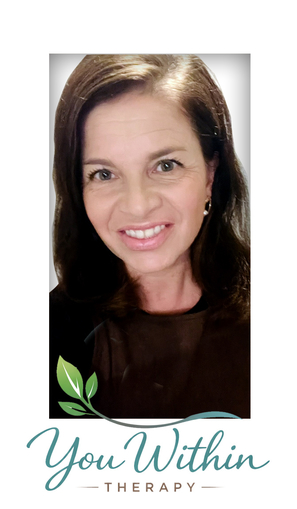
My name is Magdalena, and I am a psychologist (MSc in Psychology, Roehampton University), a Schema Therapy Practitioner (Dutch Institute of Schema Therapy), and a trainee integrative psychotherapist.
I also have a background in anthropology, with a particular interest in symbolic culture — the ways in which meaning is expressed through symbols, imagination, and dreams. This perspective continues to inspire my therapeutic work, as I see every person\'s inner world as rich in metaphor, story, and creative potential.
In my practice, I integrate psychological understanding with curiosity about the human experience — how we make sense of ourselves and our relationships, and how symbols and emotions can guide us toward growth and healing.
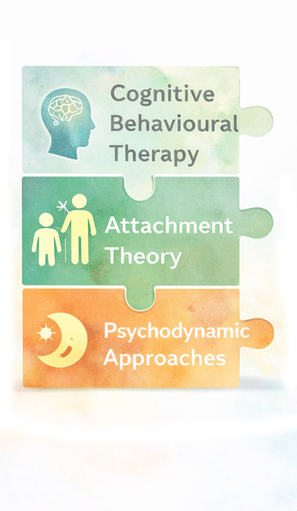
Schema Therapy (ST) is an integrative, innovative, and creative form of psychotherapy that combines elements of cognitive behavioural therapy, attachment theory, and psychodynamic approaches. It focuses on understanding and transforming deep, recurring emotional patterns — called schemas — that shape how we think, feel, and relate to others.
Schemas (also known as early maladaptive schemas) are long-standing emotional and cognitive patterns that often form when important childhood needs are not adequately met — such as the need for safety, love, freedom of self-expression, play, and consistent boundaries.
When these needs are neglected or violated, we may internalise painful beliefs like “I\'m not good enough,” “People always leave me,” or “The world is unsafe.” Do you ever notice that certain experiences keep repeating — unfulfilling relationships, critical work environments, or feeling unseen despite your efforts? These are often signs of active schemas.
For example, someone with an Abandonment Schema may repeatedly choose emotionally unavailable partners, while a person with a Defectiveness Schema might feel drawn to critical or rejecting people, reinforcing their sense of unworthiness.
In childhood, we often learn coping strategies to protect ourselves — by surrendering to, avoiding, or overcompensating for these painful beliefs. While these strategies once helped us survive, in adulthood they can keep us stuck in familiar yet unhelpful patterns.
Schema Therapy is not only reflective but also experiential. It invites both the mind and the body into the healing process. Through creative and embodied techniques — such as guided imagery, chair work, or gentle body awareness — we can deepen emotional understanding and reconnect with unmet needs in a compassionate way.
Healing begins when we learn to observe our patterns with empathy rather than criticism. Schema Therapy offers both insight and emotional repair — helping you develop a new, more caring relationship with yourself and others. Change takes time, but it is possible. With the support of a therapist, you can begin to build a life that feels safe, authentic, and connected.
Areas I Can Support You With
Helping you navigate emotional, relational, and psychological challenges with care and understanding.
Common Challenges
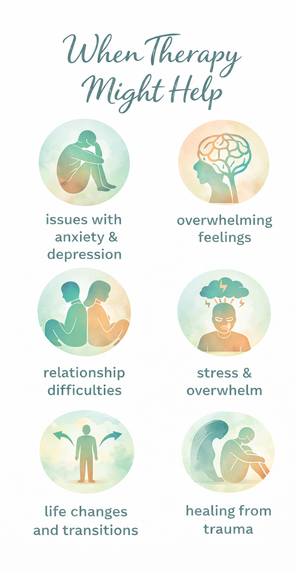
Issues such as anxiety, depression, relationship difficulties, stress, and recurring patterns from early experiences.
When Therapy Might Help
If you notice repeated emotional patterns, feel stuck, or want to better understand yourself and your relationships.
Exploring Life\'s Challenges Together
Therapy provides a safe space to reflect, gain insight, and develop practical strategies for growth and healing.
Alternatively you can contact me via the contact form. I will get back to you as soon as possible during business hours.
You can also reach out if you have any questions about therapy sessions or availability.

25/1/2026
I just want to take a moment to thank everyone who has been coming to therapy with me. It’s been such a privilege to walk alongside you on your journeys — through reflection, growth, and rediscovery.
So many of yo...
25/1/2026
I just want to take a moment to thank everyone who has been coming to therapy with me. It’s been such a privilege to walk alongside you on your journeys — through reflection, growth, and rediscovery.
So many of you are making wonderful progress, finding your voices, and feeling more confident in who you are. It’s beautiful to see the changes — both big and small — that come from courage and self-compassion.
Our results are freedom: freedom to feel, to choose, to live more fully and authentically.
Thank you for your trust, your openness, and your commitment to this process.

25/1/2026
1/11/2025
Schema Therapy is an integrative form of psychotherapy that combines elements of cognitive-behavioral therapy (CBT), attachment theory, psychodynamic concepts, and emotion-focused techniques. Developed by Dr...
25/1/2026
1/11/2025
Schema Therapy is an integrative form of psychotherapy that combines elements of cognitive-behavioral therapy (CBT), attachment theory, psychodynamic concepts, and emotion-focused techniques. Developed by Dr. Jeffrey Young, it focuses on identifying and changing deeply rooted patterns of thinking, feeling, and behaving—known as schemas—that develop in childhood and continue to influence a person’s life. These maladaptive schemas often arise from unmet emotional needs and can lead to recurring negative life patterns, relationship difficulties, and emotional distress.
Schema Therapy helps individuals recognize these patterns, understand their origins, and learn healthier ways to meet their emotional needs. It is especially effective for long-standing or complex psychological issues, such as personality disorders, chronic depression, and relationship problems.w.mvois.fr/vas/bulc/club.php?ch=cal&ftn=adev